Real Estate Durango- Blackmore Group

Septic in La Plata County – Durango Bayfield Information
If you’re selling a property in La Plata County that’s on a septic system, the rules changed this year. The Board of Health adopted new on-site wastewater treatment system regulations in January 2026, and they took effect March 2, 2026. The Transfer of Title program is now called the Continued Use Permit program.
Most properties served by a septic system still have to be inspected before they can sell, and you still need a document from Public Health before you get to closing. If your system is working and it’s permitted correctly, not much actually changes for you.
Watch the full breakdown
Video: New La Plata County Septic Rules, What Sellers Need to Know, Blackmore Group Realty. The written version below covers the same ground.
About us
Blackmore Group Realty works ranch, land, and luxury property across Southwest Colorado and Northern New Mexico. Ashley Blackmore is a licensed broker in both Colorado and New Mexico, grew up in this part of the state, and has watched more than one closing get derailed by a septic permit nobody pulled until two weeks out. If you’re thinking about listing a place on septic, this is the conversation worth having early.
Blackmore Group Realty, 2901 Main Ave, Durango, Colorado. Call the team at (970) 444-2431.
What changed in La Plata County in 2026
The La Plata County Board of Health adopted new OWTS regulations on January 15, 2026. They took effect March 2, 2026, and the updated Colorado Regulation 43 was adopted by reference, so it took effect here the same day.
The name change is the headline. What used to be the Transfer of Title Acceptance Document is now the Continued Use Permit. Same underlying requirement though. Most properties on septic have to be inspected before sale, and the county has to sign off before the transaction closes.
Here’s the part sellers should hear clearly. The updated design and siting standards apply to new installations, system replacements, and significant repairs. An existing system that’s functioning properly does not have to be brought up to the new standard just because you decided to list.
What a septic inspection actually checks
Two halves to it. The physical system, and the paperwork.
On the physical side, a certified inspector looks at tank watertightness, meaning cracks, failed seams, and groundwater getting in where it shouldn’t. They run a flow test to see how the system handles water actually moving through it. They probe the soil treatment area for saturation, because saturated soil means effluent isn’t going anywhere. They verify setbacks from your well, the house, and any surface water. And they check for access ports brought up to grade, which a lot of older systems around here simply don’t have.
Tank pumping is commonly part of the process, and on some systems the county wants a record drawing showing what’s actually in the ground.
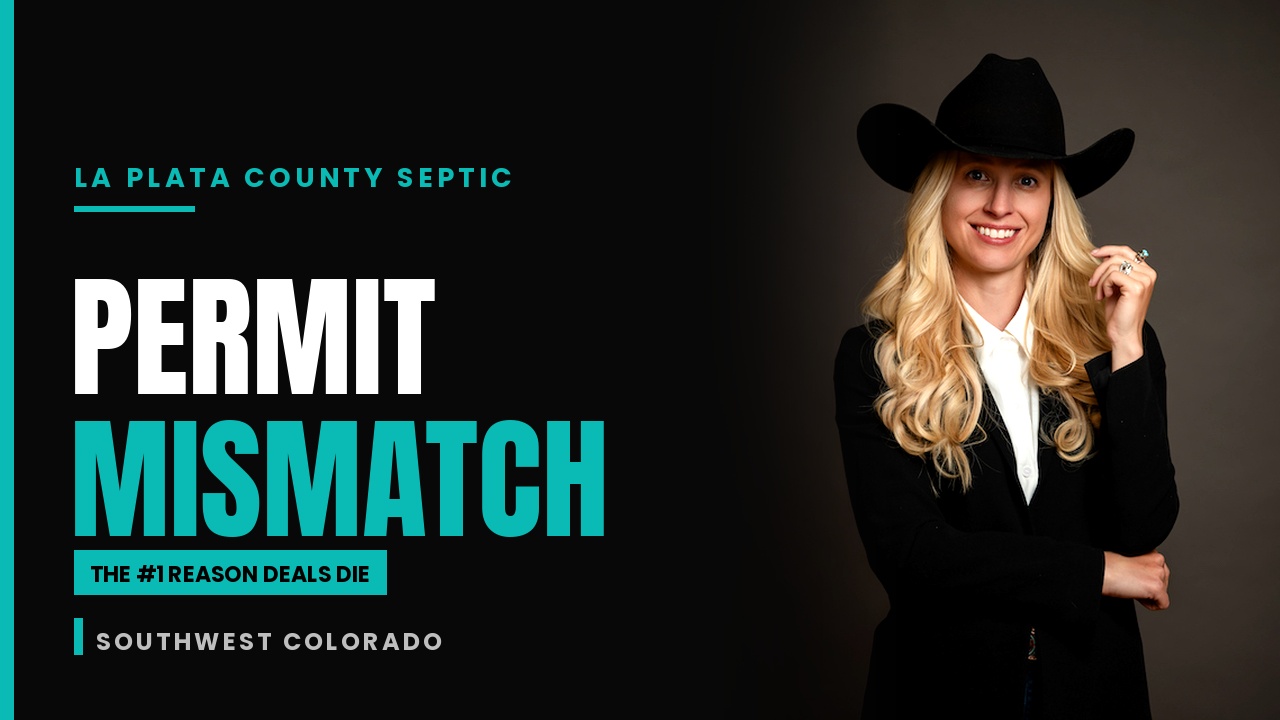
The permit mismatch is what kills deals
It’s usually not a cracked tank. It’s that the system isn’t permitted for what’s on the property today.
Bedroom count is almost always the culprit. Somebody finished a basement fifteen years ago and added two bedrooms, and the septic was permitted for three. Now the county’s looking at a five bedroom house sitting on a three bedroom system. Unpermitted second dwellings do the same thing. A casita, a converted shop, a guest apartment with a bathroom in it.
That’s not automatically a dealbreaker. But you want to know before you’re under contract, not two weeks out from closing when your leverage is gone.
The Continued Use Permit process
Hire a third-party NAWT certified inspector. Not your home inspector. It has to be somebody certified specifically for this work, and the county maintains a courtesy list, though you should confirm any inspector’s certificate is current before you hire them.
The inspector completes the county’s inspection report. You then apply for the Continued Use Permit, and the county asks that you do this at least two weeks before your expected closing date. There’s a $120 nonrefundable administrative fee. Once complete paperwork is in with payment, review generally takes about three business days.
If the system fails, or the permit history doesn’t match what’s on site, you’re not stuck. A Conditional Continued Use Permit paired with a signed Buyers’ Agreement to Repair or Alter lets the sale go through with the repairs handled after closing. It’s a real tool and it saves transactions. It’s also a negotiation, which is another reason to walk in already knowing.
Who’s exempt
Several situations fall outside the Continued Use Permit requirement:
- The system was installed and given final approval by La Plata County Public Health or San Juan Basin Public Health within four years of the closing date
- The system was repaired and given final approval within one year of closing, with a NAWT inspection report submitted
- The change in ownership is not an arm’s length transaction
- The change creates or ends joint ownership involving an original owner or their spouse, parent, or child
- The transfer goes to a trust in the same name as the original owner, or to an LLC where the original owner is a director
- The transfer results from foreclosure or forfeiture
Worth knowing that even when a property is exempt, a title company, a buyer, or a buyer’s agent can still ask for the inspection anyway.
Before you list, do this
Pull your septic permit. It’s public, it’s on the county’s permit portal, and it takes about five minutes. Read what the system was approved for, count the bedrooms actually in your house, and see whether those numbers line up. If they don’t, you’ve got a problem you can solve on your own timeline instead of a buyer’s.
Then get the inspection booked early. Inspectors get busy, especially in spring, and two weeks before closing is the county’s minimum, not a comfortable cushion.
Questions on a specific property? Blackmore Group Realty, 2901 Main Ave, Durango. (970) 444-2431
Common questions
Do I need a septic inspection to sell my house in La Plata County?
Yes, in most cases. Most properties served by an on-site wastewater treatment system must be inspected before sale and require a Continued Use Permit from La Plata County Public Health before closing. Several exemptions apply, including systems that received final approval within four years of the closing date and transfers that are not arm’s length.
What is a Continued Use Permit in La Plata County?
The Continued Use Permit is the document La Plata County Public Health issues confirming a septic system has passed inspection and is properly permitted for the use on the property. It replaced the Transfer of Title Acceptance Document under regulations effective March 2, 2026.
Do the new 2026 septic regulations require me to upgrade my existing system?
No. The updated design and siting standards apply to new installations, system replacements, and significant repairs. An existing system that is functioning properly does not have to be brought up to the new standards in order to sell.
Can a home inspector do the septic inspection?
No. The inspection must be performed by a third-party NAWT certified inspector. La Plata County maintains a courtesy list of local certified inspectors, and additional certified inspectors can be found through the NAWT website. Verify that an inspector’s certificate is current before hiring them.
What happens if my septic system fails inspection before closing?
You can still sell. Apply for a Conditional Continued Use Permit and attach a fully executed Buyers’ Agreement to Repair or Alter, which commits the buyer to completing the required work after closing. A repair or alteration permit may also be required.
How much does a Continued Use Permit cost and how long does it take?
The administrative fee is $120 and it is nonrefundable. La Plata County Public Health generally reviews complete paperwork in about three business days. Apply at least two weeks before your expected closing date.
Why do septic permits and bedroom counts have to match?
A septic system is sized and permitted for a specific number of bedrooms, because bedroom count is the standard proxy for wastewater load. Finished basements, added bedrooms, and unpermitted second dwellings create a mismatch between the recorded permit and the structure on site, which can trigger a repair or alteration permit before the property can transfer.
Keep looking
HOMESFORSALEDURANGO Colorado
Homes For Sale In Bayfield
La Plata County Real Estate
Homes For Sale In Pagosa Springs
Contact The Team
Source: La Plata County Public Health, On-Site Wastewater Treatment Systems. OWTS team: (970) 828-8842.
Current as of August 2026. General information about La Plata County septic regulations, not legal advice. Rules, fees, and processing times change. Confirm current requirements with La Plata County Public Health before relying on any of this in a transaction.