Real Estate Durango- Blackmore Group

Selling a Home in Durango, Colorado: How the Process Works and How to Prep
Selling a Home in Durango, Colorado: How the Process Works and How to Prep
Selling a home in Durango isn’t quite like selling one in a big metro, and the differences are exactly the things that trip up sellers who treat it like a generic transaction.
Mountain properties come with wrinkles a suburban listing never has. Wells, septic, water rights, wildfire considerations, rural access, and a buyer pool that’s often relocating from out of state and doesn’t know the local quirks. Get those things right and a Durango home sells well. Get them wrong and you leave money or certainty on the table.
Here’s how the process actually works, and how to set yourself up for a clean sale.
Start with realistic pricing
Pricing is the whole game, and it’s where emotion does the most damage.
The trap is anchoring to what you paid, what you put into it, or what your neighbor swears their place is worth. None of those determine value. The market does, and in Durango the market is fragmented, downtown, the planned neighborhoods, the rural valleys, and the surrounding towns all behave differently. A comparative market analysis that pulls genuinely comparable recent sales in your specific micro-market is the only honest starting point.
Price it right and you create competition, which is what drives the best outcome. Price it high to “leave room to negotiate” and you usually do the opposite. The early days on the market are your moment of peak attention. Overprice through that window and the listing goes stale, then you end up chasing the market down with price cuts, often landing lower than if you’d priced it correctly from day one. We’d rather have the honest conversation up front.
We’re a brokerage, not your financial advisor, so the pricing call is ultimately yours. Our job is to give you accurate data and a clear read on the market so you can make a smart decision.
Prep that actually pays off
You don’t need to renovate. You need to remove every reason for a buyer to hesitate.
The high-return basics: declutter hard, deep clean, and depersonalize so buyers can picture their own life in the space. Fix the small, visible stuff, the dripping faucet, the sticky door, the scuffed paint, because those little things make buyers wonder what bigger things you’ve ignored. Curb appeal matters more than people think, especially here, where the setting is half the sell. Tidy the yard, clear the walkway, and in winter keep the drive and steps clear so showings feel welcoming instead of treacherous.
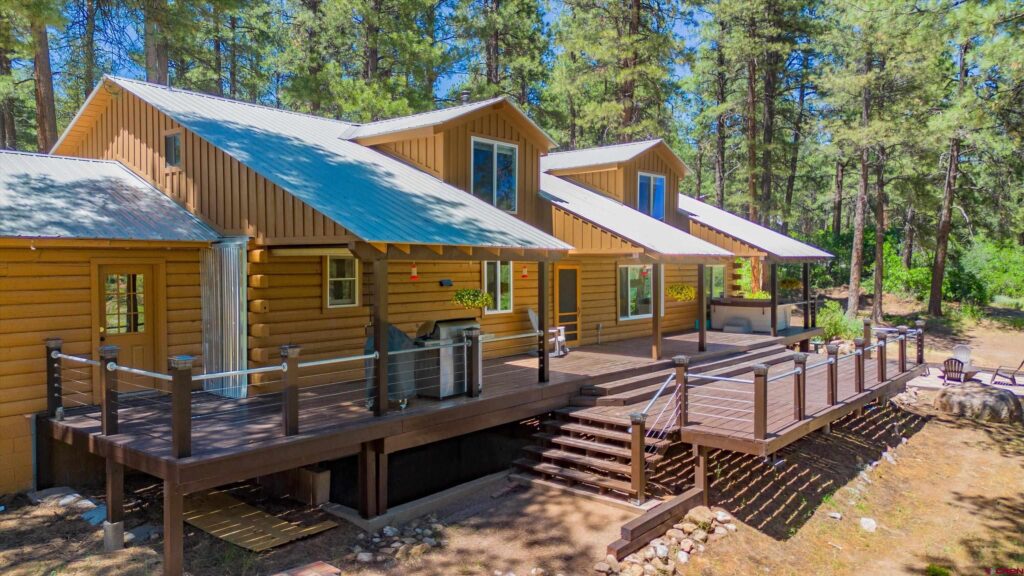
For mountain and rural homes specifically, lean into the lifestyle. Clean decks and patios, clear sightlines to the views, a wood stove laid and ready in winter, a porch that invites you to sit. Buyers are often falling for a way of life, not just a floor plan, so help them feel it.
A pre-listing inspection is worth considering. It costs a little up front, but it lets you find and address issues on your own terms instead of getting surprised mid-deal when the buyer’s inspector finds them. Fewer surprises means fewer renegotiations.
Get the rural stuff sorted early
This is where Durango sellers either shine or stumble.
If your property is on a well, find your well permit and know what it allows. Buyers, especially the ones with horses or gardens, will ask, and having the permit type and details ready signals that you know your property and removes a question mark from their decision. The same goes for water rights and any ditch shares. If irrigation water is part of your property’s value, have the documentation in order and be clear about what conveys.
On a septic system, know its condition and service history. Some transactions involve a septic inspection or transfer-of-title inspection, so getting ahead of it keeps the timeline smooth.
For properties with wildfire exposure, mitigation you’ve already done is a selling point. Document the defensible space, the roof type, any FireWise work. It can ease a buyer’s insurance worries, and insurability is increasingly part of whether a mountain deal even closes.
And confirm your access and survey situation. If there’s anything unusual about easements, shared roads, or boundaries, it’s far better to surface it on your terms than to have it derail a deal during the buyer’s due diligence.
Understand Colorado’s disclosure expectations
Colorado generally expects sellers to disclose known material facts about the property, the stuff that would matter to a reasonable buyer. The instinct to hide a known issue almost always backfires. Undisclosed problems that surface later can blow up a deal or create real liability.
The better play is honesty handled well. Disclose what you know, and where it makes sense, address the issue before listing or price it in. Buyers respond to transparency. It builds the trust that carries a deal through inspection and closing. We’ll walk you through the standard disclosure forms and what belongs in them, and for anything with legal nuance, we’ll point you toward the right professional, since we’re not attorneys.
Marketing that reaches the right buyer
A huge share of Durango buyers come from out of the area. They’re shopping online from Texas, California, Arizona, the Front Range, often before they ever set foot here. That reality shapes how a property should be marketed.
Strong photography is non-negotiable, and for the right property, video and aerial footage that captures the setting can do real work, because the views and the land are often the whole story. The listing needs to live where out-of-area buyers are actually looking, with copy that helps someone unfamiliar with the area understand what they’re seeing and why it matters. A buyer in Dallas doesn’t automatically know what Animas Valley frontage or a domestic well permit means for their life. Good marketing connects those dots.
This is the part of the business we genuinely love, and it’s where the right brokerage earns its keep, getting your property in front of the people most likely to fall for it, and telling its story in a way that makes them act.
What to expect once you’re under contract
When an offer comes in, it’s rarely just about price. Terms matter, the closing timeline, the financing type, contingencies, what the buyer is asking you to fix or credit. A clean offer at a slightly lower number can beat a higher offer loaded with conditions. We’ll help you read the whole picture.
After acceptance, the buyer moves into their inspection and due diligence period. On a Durango property, expect them to look closely at the well, septic, water, and any rural considerations, which is exactly why getting those sorted early pays off. There may be a round of negotiation after inspection. Then the deal moves through appraisal, the buyer’s financing, title work, and finally closing.
The smoother you’ve made the earlier steps, the calmer this stretch goes. Most of the deals that fall apart do so because a surprise showed up that could have been handled before listing.
A quick word on timing
Sellers always ask when the best time to list is. In a four-season mountain town, there’s a rhythm, late spring and summer tend to bring more buyer activity, partly because the place looks its best and partly because relocating families like to move before the school year. Fall has its own appeal with the colors. Winter is quieter on volume but the buyers who are out looking in January are usually serious.
That said, the right time to sell is often more about your life and the specific property than the calendar. A well-priced, well-prepared home finds its buyer in any season. We’ll give you an honest read on how timing might play for your particular place.
Understanding your net, not just your price
Sellers fixate on the sale price, which is natural, but the number that actually lands in your account is the net, and it pays to understand it before you list.
Out of the sale price come the costs of selling: real estate commissions, your share of closing costs, any title and recording fees, prorated property taxes, payoff of your existing mortgage, and any credits or repairs you agree to during negotiation. If you’re carrying a low-rate mortgage, the payoff is straightforward, but it’s still worth seeing the full picture so the closing statement doesn’t surprise you.
A good agent will prepare a seller net sheet early, an estimate of what you’ll walk away with at a given sale price, so you can plan your next move with real numbers. This matters especially if your sale is funding your next purchase, since the timing and the net both feed directly into what you can afford next. We’re not your tax advisor, and questions like capital gains on a sale are worth running by a professional, but we’ll make sure you understand the real-estate side of the math clearly.
Selling land or a rural property is different
If what you’re selling is land, a ranch, or a rural property, the playbook shifts.
Land buyers care about different things than home buyers, water, access, mineral rights, zoning, buildability, ag status. So the prep is different too. Have your documentation in order: well permits, water rights, survey, easements, any conservation easement terms, and the ag classification if it applies. The cleaner that package, the smoother the sale, because rural buyers are doing serious due diligence and every unanswered question is a reason to hesitate or chip the price.
Marketing rural property is also its own craft. The story is often the land itself, the views, the water, the lifestyle, the legacy, and that calls for photography and video that capture the setting, plus copy that helps a buyer understand the functional realities, not just the beauty. And the timeline runs longer, since land and ranch deals carry extended due diligence. Pricing rural property is trickier too, because true comparable sales are scarcer and more variable than in-town homes, which makes local expertise genuinely valuable. This is a big part of what we do, and it’s a different muscle than selling a subdivision home.
A little staging goes a long way
Last thing. You don’t need a full professional staging budget, but a few intentional touches help buyers connect.
Let the light in, open the blinds, clean the windows, and time showings for when your home shows its best light, the morning sun in some rooms, the sunset views in others. Keep the spaces neutral and uncluttered so buyers picture themselves there. In a mountain home, set the scene a little: a fire ready to light in winter, the deck staged for a summer evening, the views framed and unobstructed. You’re selling a feeling as much as a floor plan. Help buyers feel it the moment they walk in, and you make their decision easier.
How do I sell my house in Durango, Colorado? The core steps are pricing it accurately with a local market analysis, prepping the home to remove buyer hesitations, sorting out rural specifics like well, septic, and water rights early, completing Colorado’s disclosures honestly, marketing strongly to reach out-of-area buyers, and then managing the contract, inspection, and closing process.
What do sellers have to disclose in Colorado? Colorado generally expects sellers to disclose known material facts about the property, meaning issues that would matter to a reasonable buyer. Hiding known problems tends to backfire and can create liability, so the smart approach is honest disclosure, ideally addressing or pricing in issues before listing.
Do I need to deal with my well and water rights before selling? Yes, getting ahead of it helps a lot. Have your well permit and any water rights or ditch share documentation ready, since buyers will ask, especially those wanting livestock or irrigation. It removes uncertainty and keeps the deal moving smoothly.
What’s the best time to sell a home in Durango? Late spring and summer typically bring the most buyer activity, partly because the area looks its best and relocating families want to move before the school year. That said, a well-priced, well-prepared home sells in any season, and the right timing often depends more on your situation and the property.
How should I price my Durango home? Base it on a comparative market analysis of genuinely comparable recent sales in your specific part of the market, not on what you paid or what you’ve invested. Accurate pricing creates competition, while overpricing usually leads to a stale listing and eventual price cuts.
Does wildfire mitigation help when selling a mountain home? It can. Documented mitigation like defensible space, a fire-rated roof, and FireWise work can ease a buyer’s insurance concerns, and since insurability increasingly affects whether mountain deals close, it can be a real selling point.
Thinking about selling in Durango or the surrounding area? We’d love to give you an honest read on your property, what it’s worth, how to prep it, and how to get it in front of the right buyers. Reach out to Blackmore Group Realty and let’s talk strategy.
This is general guidance, not legal or financial advice. For disclosure obligations and anything with legal nuance, consult a qualified Colorado real estate attorney.